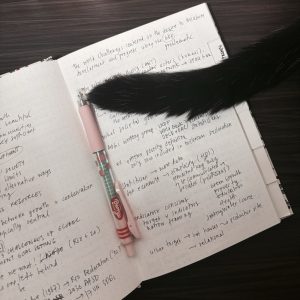
One from a course called Sustainable Development: Ideas and Imaginaries. The second was from a philosophy course called Eco-technology: Urgency, Emergence, or Illusion? (which, admittedly, was much more interesting as a topic than as an actual course).
What I didn’t expect was how often both ended up circling the same question:
How do we know we’re making progress, and who gets to decide?
I don’t know. FIFA, perhaps.
I was seriously considering turning part of my savings into a public policy master’s degree. Then I realised I was already getting a fairly intensive introduction for free, ha…ha…ha…. (Thanks, Jokowi) So I decided liquidity might be the more prudent policy choice.
I suppose many Indonesians are already pursuing a hypothetical master’s degree in surviving the regime. The fieldwork component has been particularly robust lately. ⋆·˚ ༘ *⚠️💣💥
A comment from a recent conversation with Rob has been lingering in my mind.
We were discussing politics, specifically the current ruling establishment in Indonesia, and the tendency to approach it in terms of right and wrong. I don’t necessarily disagree with that characterization. There are situations where I do see a moral dimension to things, where I find it difficult to reduce everything to strategy, pragmatism, or competing interests. Sometimes, at least for me, there is a meaningful distinction between what I believe is right and what I believe is wrong.
What stayed with me, however, was a different observation: that perhaps some of us see things this way because we were raised to.
The comment lingered. Which was unsurprising, given that I have spent too much time discussing some version of this question with Dayu, who looks at my family history and somehow concludes that what I need is more motherhood (my first instinct was to punch her).
⚘ 𖥧
I know our upbringing shapes us. It would be dishonest to pretend otherwise. But I don’t experience my convictions as something I inherited passively. In fact, when I look at some of the views I hold today, they often feel quite distant from many of the values I was taught growing up.
Maybe part of my reaction comes from the fact that I have a complicated relationship with my mother.
What I don’t think people always appreciate is how difficult it can be to examine, challenge, and sometimes resist the values you grew up with. It takes effort to question assumptions that once felt unquestionable, to unlearn certain ways of thinking, and to decide for yourself what you believe.
And sometimes, the price of that choice is a relationship. Accepting a distance from the people who raised you.
𓆱
Growing up, I was surrounded in a culture where parents are often seen as the primary authors of who their children become. Careers, marriages, beliefs, and life choices are frequently treated as extensions of the family itself.
In many Asian families, the relationship can feel almost inseparable: if the fruit is good, the tree deserves the credit; if the fruit is flawed, the tree is blamed. But adulthood has complicated that metaphor for me. At some point, the fruit is no longer hanging from the tree. (This is why I was never destined for a political dynasty, lmao.)
And perhaps what I keep coming back to is this: I don’t think my parents deserve all the credit for the values I hold today, just as I don’t think they deserve all the blame for the ways in which I fall short.
I checked, and my last post was published in June last year. More than a year ago. Not exactly the kind of consistency that builds a loyal readership.
To be honest, it hasn’t exactly felt like the easiest year to write. Not just personally, but collectively. It feels like every week brings another headline, another uncertainty, another reason to feel a little more exhausted than before. Perhaps that’s true everywhere, but it certainly feels true here in Indonesia.
And yet, the thing that finally convinced me to open a blank page again was not a profound life event, a major realization, or a carefully planned writing routine.
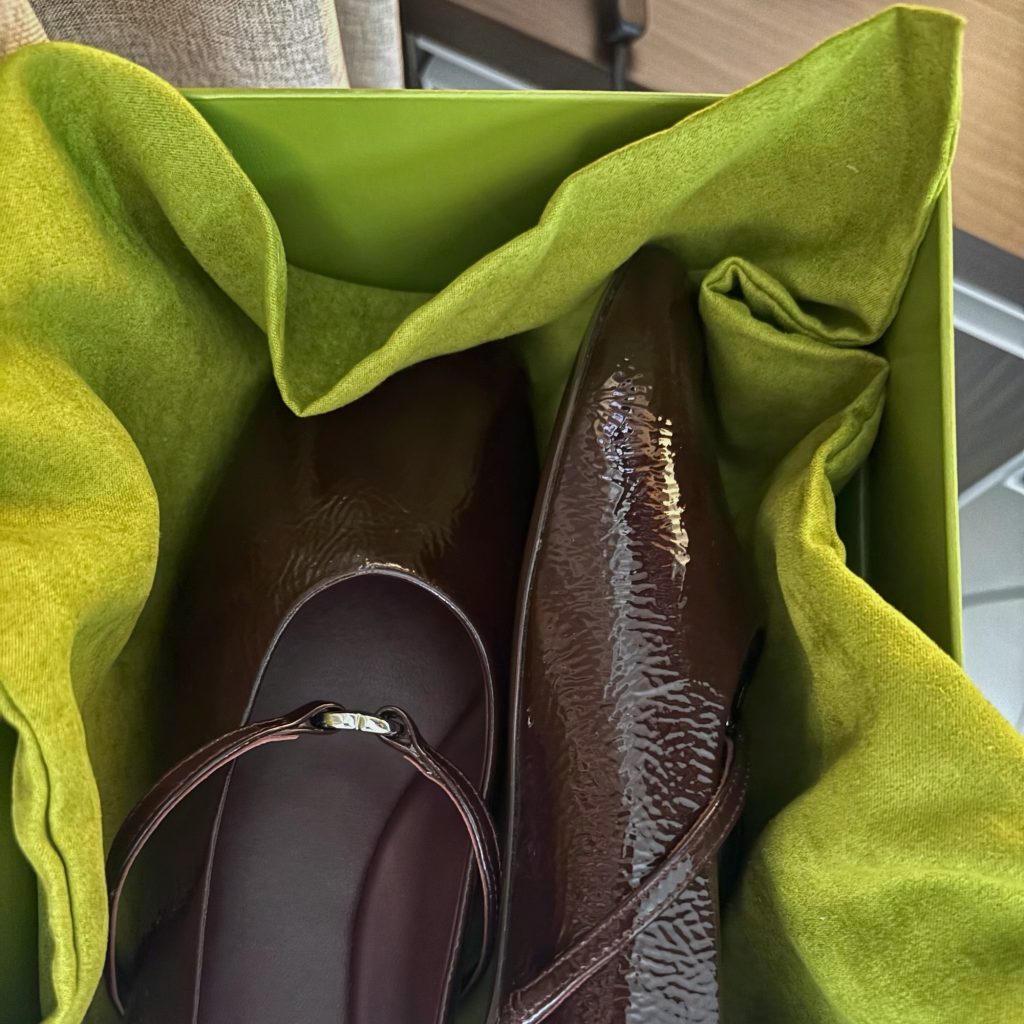
A few days ago, something I ordered finally arrived. A pair of plum ballet flats nestled in a deep olive-green box, accompanied by a velvet dust bag.
Someone, somewhere, had chosen this particular shade of plum for the shoes.
Someone, somewhere else, had settled on olive green for the box and dust bag.
Perhaps they were never meant to complement one another. That didn’t stop them from doing so.
It reminded me of a story my friend still tease me about to this day.
I was waiting for a Gojek ride after work when the driver called and asked the usual question:
“Mbak pakai baju warna apa?”
Without thinking, I replied,
“Baju warna salmon, ya, Pak.”
The moment I hung up, a few colleagues started laughing.
“Mana ngerti driver Gojek warna salmon.”
To be fair, they had a point. Most people would have simply said pink.
But colors carry references, textures, and associations. Not because I know anything particularly sophisticated about them, but because “pink” and “salmon” feel different in my head, even if they belong to the same family.
I suspect this is why certain color pairings stay with me.
The first is pink and green. Put them together and there’s a good chance I’ll like it. I do have favorites, though: rosewood, ballerina, or Persian pink with pine or fern green. I especially love seeing them on small things—trinkets, bracelets, stickers, printed visual and other completely non-essential items that somehow become very essential once they’re pretty enough.
The second is blue and brown. This one has a stronger grip on me because it extends to clothing. Give me a slate or muted slate blue paired with an ash or saddle brown like something borrowed from an old book cover, I’ll probably be tempted.
And now, I think plum and olive have joined the list.
In a year that has often felt heavy, there was something comforting about finding pleasure in a color combination.
Appreciating a beautiful package.
Finding the right word for a shade.
Moments.
And sometimes, that’s reason enough to write again.
One things that’s been quietly haunting me more and more, is the internal reckoning I do between the art and the artist.
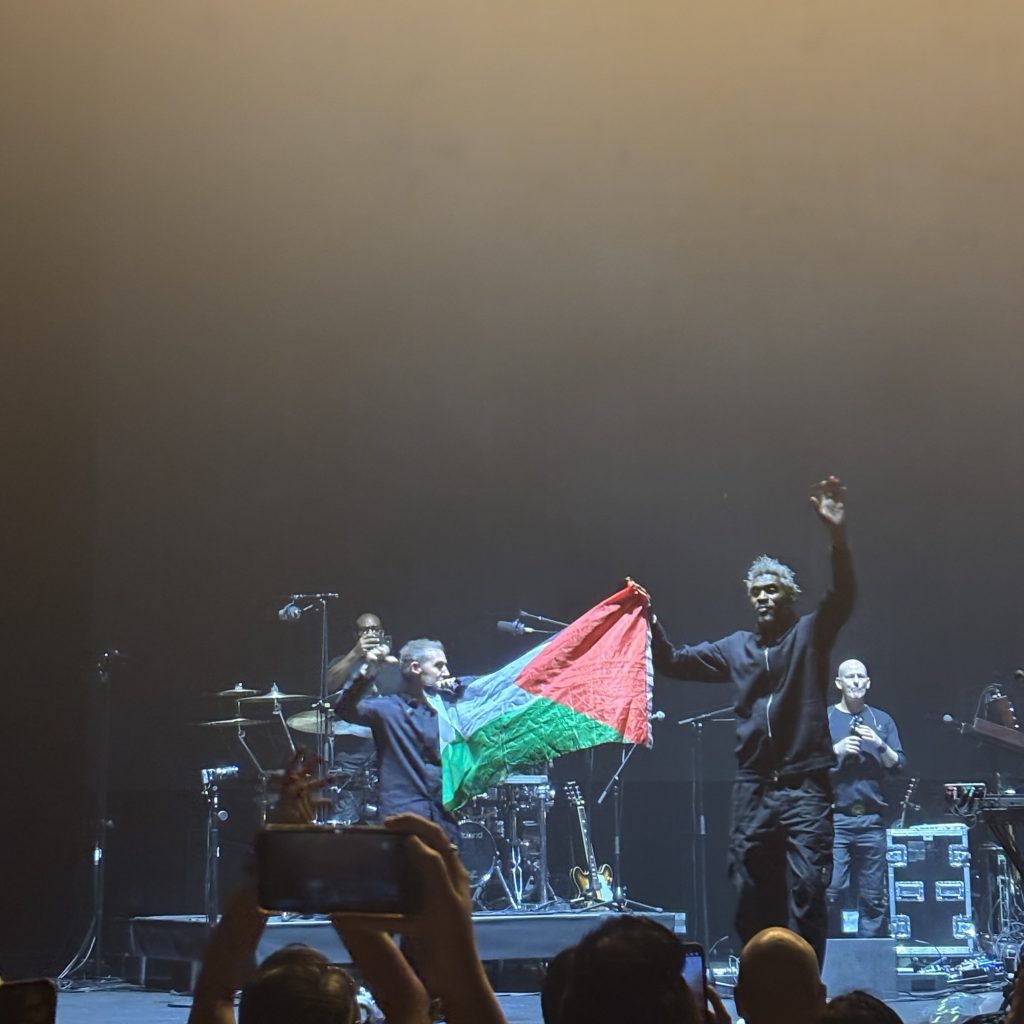
The reflex to look up whether some of the artists I follow, like, watch, or listen to have made problematic political statements—lately, especially in relation to something as urgent and painful as the genocide in Gaza.
Of course, it’s impossible to do a deep dive every single time. I still rely on quick scans and patchy context. Like all the other things we try to outrun, sometimes we just can’t escape it. We’re eventually brought back, made to face it all, to coexist with it.
Through all of this, I keep returning to when I became aware of these complexities: how that awareness shaped me, and what it continues to ask of me. Even with works I’ve cherished for years, I find myself revisiting them through this lens. Maybe that’s why it stings a little extra right now. I’m impatiently waiting for the eighth book in a series by a problematic arsehole. The excitement is still there, but it’s layered now.
It’s lonely sometimes. But it also feels necessary. We still enjoy the work, still feel the nostalgia, still underline the passages that move us. But something definitely dies in that knowing.
And maybe this, too, is part of the dignity of being a curator. We hold the tension. We map the work within its social currents. We listen not just to the artist’s craft, but to their conscience.
This morning’s call included updates on our colleagues working in the Trump-Elon era. The absurdities we discussed, followed by conversations about the troubling events in our own country, left me feeling disheartened. It feels like I was tricked into being born into this world.
Yet somehow, I’m not hopeless. Not in myself, not in my closest circle. Just staying motivated at work feels like enough. I’m proud of my friends (especially the girls!) for their efforts in both their professional lives and in caring for their families. I love and take pride in my circle.
Reflecting on women’s resilience, I’m continually amazed by the amount of pain we can endure. Hormonal changes introduce various emotional and physical challenges, and the recurring discomfort of menstrual cycles adds to our load. Interestingly, I just happened to read about the physiological connection between the jaw and the pelvis. Turns out, tension in one area can mirror tension in the other due to the intricate network of muscles and fascia linking them. So if you tend to clench your jaw, your pelvic floor might be feeling the strain too.
Hmm.. Hi? Chronic jaw clenching is so me! I’m ridiculously expressive with my jaw, whether out of excitement, frustration, or pure affection, especially when talking to my cats. They don’t care, of course. But should I tone the gemes-gemes down for the sake of my pelvic floor?
I was about to pick a photo I uploaded but decided to just browse the media library instead, and look what I found, lol. What even is this? By the way, that’s Sheldon’s cat, circa 2010.
It’s a different kind of heartache, one that’s difficult to navigate. My circle of friends has never been big, and over time, it has only gotten smaller. In some ways, that makes things a little more awkward, a little quieter. But at the same time, it also feels more effortless, more low-maintenance. There’s a comfort in knowing that the friendships that remain don’t require constant upkeep.
They’re my way of showing up, something that still feels unfamiliar in social situations, where I’m used to my own space and no longer needing to prove anything. We simply are.
Notes on (WIP): I no longer use this blog just to showcase finished pieces like a typical blog. I don’t draft posts anymore. I just hit publish and work on them gradually, refining as I go. That means entries like the Unlived Lives series are constantly evolving.And somehow, it feels liberating. This process helps me grow without getting stuck in perfectionism. Besides, this blog has never truly felt public to me, it’s more like a private backyard.
A car tore through the street, its engine splitting the midday hush.
‘This time of day? Of course.’ she muttered from the porch, frowning at the intrusion.
A car tore through the street, its engine splitting the midday hush.
The house had been standing for nearly 40 years, its German-engineered windows boasting impressive sound insulation, reducing noise by up to 50 dB. Compared to when she first moved in, a time when she often worried about the effects of constantly using earplugs, she now felt a quiet sense of pride in finally being able to decide (and afford!) to replace the old windows.
They had gone back and forth on the windows, just as they had about selling the house. Even after the mortgage was paid, they never followed through—perhaps out of habit or out of something neither of them could quite name. Three decades in, nothing much had changed inside, no interior design theme was ever implemented. Their home remained untouched, with its built-in furniture still standing as it had since the day they moved in.
‘We don’t need it,’ her husband said. Yeah, she agreed when the idea of buying a sofa randomly came up.
They truly never felt the need. Guests were rare, almost nonexistent. The seating they had, a small dining set with two chairs and a long, multi-purpose bench that doubled as storage, always felt sufficient.
The heat that day was relentless, nudging her toward her usual routine—watering the plants, again. Now squinting against the harsh sunlight, she spotted Shiro, the stray cat that roamed their complex, making its way toward the house.
Before heading back in, she made a mental note: tomorrow, the same. Also, a little extra cat food needed to be left, just in case.
–
The name Chas had been her suggestion, borrowed from a favorite film character. It had started as a passing thought, nothing more, yet somehow, it had settled, unchallenged. She had initially resisted. It wasn’t her place. She wasn’t technically family. And yet, when she had spoken the name aloud, they had simply accepted it, as if it had always belonged.
Years ago, an accident had taken her dearest friend, and with it, the shape of everything she had known. She had taken in the young man—not in the legal sense, but in all the ways that mattered. A quiet tether had formed between them, invisible yet unshakable, linking their lives in ways neither of them had ever expected.
A soft creak echoed through the room as she shifted slightly, her eyes tracing the familiar lines of the ceiling. Afternoon light filtered through the curtains, casting long, dappled patterns across the floor. Faintly, she could hear sounds from upstairs—probably her husband watching YouTube. Her gaze drifted, unfocused. The memory came gently, as if it had been waiting just beneath the surface. The weight of Chas in her arms—small, impossibly light. How surreal it had been. How surreal it still was.
‘God,’ she whispered, barely audible. A tightness pressed against her throat, familiar and unwelcome. Then, a soft chime.
The phone screen glowed in the dimming light. Chas had replied.
‘Don’t bring anything for Opa. You know how picky he is, and we’ll just end up being scolded for wasting money,’ she typed, her fingers hovering over the screen before adding an upside-down smiley at the end. (Updated 25/02/2025)
to be continued
The “Unlived Lives” series represent short fiction of the roles that might have been destined for me in an alternate dimension, purposes I believe were meant to be mine but remained unfulfilled in the present life.
How can someone die at 26? When they were that beautiful?
I’m always grateful when people make it easy for me to leave them—simply by showing their true low-life selves.
Genuinely concerned about the political madness following Trump’s executive orders and its eerie parallels with Prabowo’s young administration. Prioritizing defense over infrastructure and education is a classic move in authoritarian and fascist-leaning governance. Lately, I’ve found myself bringing this up in almost every conversation, just to spark discussion.
I finally set a daily budget for the next two months, and I think that’s pretty cool and an achievement, haha.
Gembung, the stray cat I’ve been caring for, finally let me treat his infected neck wound after months of trying. The new medicine seems to be working, and he’s been extra sweet lately.
I heard a woman’s story that made my world feel small. My privilege, education, middle-class upbringing, some generational ‘wealth’—shaped my life so differently from hers. Yet, she lives so close.
I don’t really enjoy driving anymore.
I just started taking care of plants at home, and now I get frustrated when I’ve done all I can, but a leaf still dries out.
In the spirit of some lighthearted journaling, and with a newfound enthusiasm for getting back into the swing of things, I thought I’d share some class notes from a philosophy course I took last year titled “War: Philosophical and Interdisciplinary Approaches.” Now, I understand that topics like language classes or data analytics might not make for the most exciting blog posts, but hey, let’s give it a shot anyway!
WAR
As a matter of fact, we all know what war is. But when it comes to discussing it, it turns out to be quite perplexing and complex. Most definitions of war center around the involvement of nation-states, but it can also be an inner battle, a conflict within oneself, as it were.
At an infrahuman level, humans indeed had to engage in warfare to survive, much like animals hunting for their prey. This is something that used to be commonplace.
Nanjing! Nanjing! (City of Life and Death) – Japanese ceremony
Frequency
There have been 248 wars following World War II (you’d think there would be some trauma after WWII, but apparently not).
Out of these 248 wars, 201 were initiated by the United States, and most of them ended in failure.
Scale
In the past: wars were local or national affairs. Today: wars can be local, national, or global in scope.
Simultaneously, there can also be internal conflicts within a nation.
Trends
Access to weapons is becoming increasingly easier (is this the democratization of war?).
Wars are becoming deadlier with the advent of nuclear weapons, autonomous/AI-driven weaponry (unmanned and devoid of ethical principles).
War strategies have grown more complex and intricate, involving elements like cyber attacks and deep fakes.
Moments of waiting for “Is this going to turn into a war?” can evolve into conflicts themselves. Remember the Cold War?
Some philosophical perspectives:
Plato: War arises from the difficulty humans face in controlling their instincts.
Heraclitus: He boldly claims, “War is the father of all, and king of all.” It places some beings as gods and others as men, making some slaves and others free.
Hobbes: According to him, humans, by nature, are in a state of hostility towards each other.
Rousseau: On the contrary, Rousseau believed that humans are creatures of peace by their very nature.
Christianity: Humans are created in the image of God, imperfect yet free. They are meant to be free from war.
Behaviorism: War is a consequence of behavior conditioned by the environment and culture.
Biology: War emerges from the instinct of self-preservation (the reptilian brain), especially when threatened.
Psychology: Freud’s concept of “Death drives” suggests that war can result from humans’ self-sacrificial and self-destructive instincts. It can be driven by sympathy, cooperation, or pure aggression.
In the natural order of things, humans are paradoxical creatures: indeterminate yet determinate, free yet determined, driven by self-preservation yet capable of self-sacrifice. It all depends on one’s beliefs. War, it seems, shares this paradox.
War may not be an inherent part of human nature but rather a product of human culture. It’s a disaster celebrated in its own way.
Reflection and Interesting Tidbits
I stumbled upon an article by Jean Baudrillard titled “La Guerre du Golfe n’a pas eu lieu” (The Gulf War did not take place), published in 1991. Baudrillard’s take on this subject is mind-boggling:
He argues that this doesn’t mean the war didn’t happen, but they lose their significance as historical events.
History, much like other spheres such as sexuality, aesthetics, politics, and economics, has transformed into something “trans-” – “transsexuality,” “transaesthetics,” “transpolitics,” and “transeconomics.” It’s like a realm of simulation, a ghostly presence, an undead institution that neither fully lives nor properly dies. (Now, that’s intriguing!)
The Gulf War, according to Baudrillard, was “a degenerate form of war” where the enemy wasn’t encountered but made “invisible.” (This resonates with the idea of mediatic killings, akin to what we see in political years in Indonesia).
War reveals contrasting facets of good and evil, hero and villain – a juxtaposition that adds a unique dimension to it. Such stark contrasts often make for a more captivating composition, much like one of the principles of aesthetics – the allure of the contrast, the beauty in the starkness.
So there you have it.
(Suddenly, I’m reminded of that iconic scene in Francis Ford Coppola’s “Apocalypse Now” where “Ride of the Valkyries” plays in the background.)