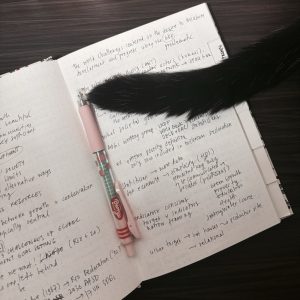
One from a course called Sustainable Development: Ideas and Imaginaries. The second was from a philosophy course called Eco-technology: Urgency, Emergence, or Illusion? (which, admittedly, was much more interesting as a topic than as an actual course).
What I didn’t expect was how often both ended up circling the same question:
How do we know we’re making progress, and who gets to decide?
I don’t know. FIFA, perhaps.
I was seriously considering turning part of my savings into a public policy master’s degree. Then I realised I was already getting a fairly intensive introduction for free, ha…ha…ha…. (Thanks, Jokowi) So I decided liquidity might be the more prudent policy choice.
I suppose many Indonesians are already pursuing a hypothetical master’s degree in surviving the regime. The fieldwork component has been particularly robust lately. ⋆·˚ ༘ *⚠️💣💥
A comment from a recent conversation with Rob has been lingering in my mind.
We were discussing politics, specifically the current ruling establishment in Indonesia, and the tendency to approach it in terms of right and wrong. I don’t necessarily disagree with that characterization. There are situations where I do see a moral dimension to things, where I find it difficult to reduce everything to strategy, pragmatism, or competing interests. Sometimes, at least for me, there is a meaningful distinction between what I believe is right and what I believe is wrong.
What stayed with me, however, was a different observation: that perhaps some of us see things this way because we were raised to.
The comment lingered. Which was unsurprising, given that I have spent too much time discussing some version of this question with Dayu, who looks at my family history and somehow concludes that what I need is more motherhood (my first instinct was to punch her).
⚘ 𖥧
I know our upbringing shapes us. It would be dishonest to pretend otherwise. But I don’t experience my convictions as something I inherited passively. In fact, when I look at some of the views I hold today, they often feel quite distant from many of the values I was taught growing up.
Maybe part of my reaction comes from the fact that I have a complicated relationship with my mother.
What I don’t think people always appreciate is how difficult it can be to examine, challenge, and sometimes resist the values you grew up with. It takes effort to question assumptions that once felt unquestionable, to unlearn certain ways of thinking, and to decide for yourself what you believe.
And sometimes, the price of that choice is a relationship. Accepting a distance from the people who raised you.
𓆱
Growing up, I was surrounded in a culture where parents are often seen as the primary authors of who their children become. Careers, marriages, beliefs, and life choices are frequently treated as extensions of the family itself.
In many Asian families, the relationship can feel almost inseparable: if the fruit is good, the tree deserves the credit; if the fruit is flawed, the tree is blamed. But adulthood has complicated that metaphor for me. At some point, the fruit is no longer hanging from the tree. (This is why I was never destined for a political dynasty, lmao.)
And perhaps what I keep coming back to is this: I don’t think my parents deserve all the credit for the values I hold today, just as I don’t think they deserve all the blame for the ways in which I fall short.
I checked, and my last post was published in June last year. More than a year ago. Not exactly the kind of consistency that builds a loyal readership.
To be honest, it hasn’t exactly felt like the easiest year to write. Not just personally, but collectively. It feels like every week brings another headline, another uncertainty, another reason to feel a little more exhausted than before. Perhaps that’s true everywhere, but it certainly feels true here in Indonesia.
And yet, the thing that finally convinced me to open a blank page again was not a profound life event, a major realization, or a carefully planned writing routine.
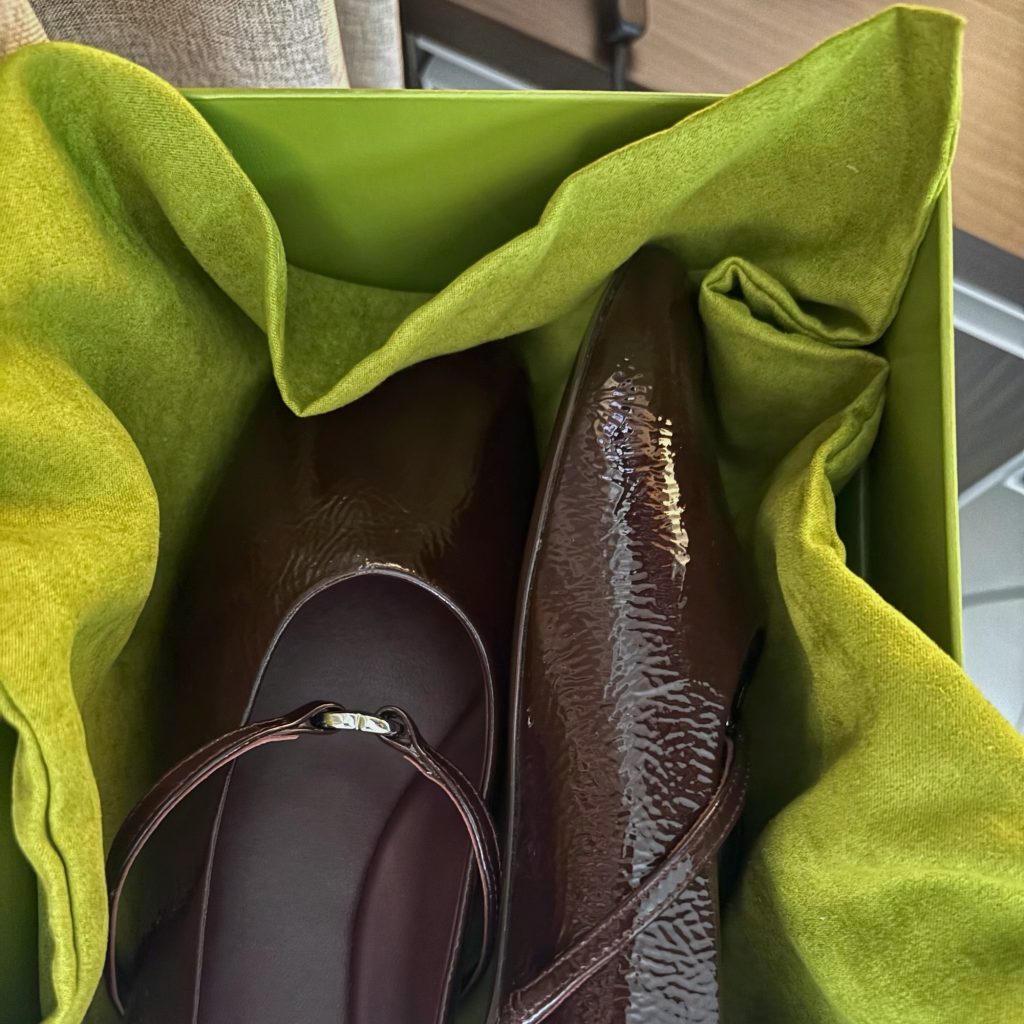
A few days ago, something I ordered finally arrived. A pair of plum ballet flats nestled in a deep olive-green box, accompanied by a velvet dust bag.
Someone, somewhere, had chosen this particular shade of plum for the shoes.
Someone, somewhere else, had settled on olive green for the box and dust bag.
Perhaps they were never meant to complement one another. That didn’t stop them from doing so.
It reminded me of a story my friend still tease me about to this day.
I was waiting for a Gojek ride after work when the driver called and asked the usual question:
“Mbak pakai baju warna apa?”
Without thinking, I replied,
“Baju warna salmon, ya, Pak.”
The moment I hung up, a few colleagues started laughing.
“Mana ngerti driver Gojek warna salmon.”
To be fair, they had a point. Most people would have simply said pink.
But colors carry references, textures, and associations. Not because I know anything particularly sophisticated about them, but because “pink” and “salmon” feel different in my head, even if they belong to the same family.
I suspect this is why certain color pairings stay with me.
The first is pink and green. Put them together and there’s a good chance I’ll like it. I do have favorites, though: rosewood, ballerina, or Persian pink with pine or fern green. I especially love seeing them on small things—trinkets, bracelets, stickers, printed visual and other completely non-essential items that somehow become very essential once they’re pretty enough.
The second is blue and brown. This one has a stronger grip on me because it extends to clothing. Give me a slate or muted slate blue paired with an ash or saddle brown like something borrowed from an old book cover, I’ll probably be tempted.
And now, I think plum and olive have joined the list.
In a year that has often felt heavy, there was something comforting about finding pleasure in a color combination.
Appreciating a beautiful package.
Finding the right word for a shade.
Moments.
And sometimes, that’s reason enough to write again.
One things that’s been quietly haunting me more and more, is the internal reckoning I do between the art and the artist.
The reflex to look up whether some of the artists I follow, like, watch, or listen to have made problematic political statements—lately, especially in relation to something as urgent and painful as the genocide in Gaza.
Of course, it’s impossible to do a deep dive every single time. I still rely on quick scans and patchy context. Like all the other things we try to outrun, sometimes we just can’t escape it. We’re eventually brought back, made to face it all, to coexist with it.
Through all of this, I keep returning to when I became aware of these complexities: how that awareness shaped me, and what it continues to ask of me. Even with works I’ve cherished for years, I find myself revisiting them through this lens. Maybe that’s why it stings a little extra right now. I’m impatiently waiting for the eighth book in a series by a problematic arsehole. The excitement is still there, but it’s layered now.
It’s lonely sometimes. But it also feels necessary. We still enjoy the work, still feel the nostalgia, still underline the passages that move us. But something definitely dies in that knowing.
And maybe this, too, is part of the dignity of being a curator. We hold the tension. We map the work within its social currents. We listen not just to the artist’s craft, but to their conscience.